
Property Damage Liability Coverage — Pennsylvania
Free to compare
Pennsylvania Requires Property Damage Liability Coverage
Pennsylvania requires property damage liability coverage on every registered vehicle. The state minimum is $5,000 per accident. This is the lowest property damage minimum in the United States, and it applies whether you insure one car or four on the same policy.
Property damage liability pays for damage your vehicle causes to someone else's property in an accident you cause — their car, a fence, a building, a guardrail. The $5,000 minimum is a floor set by Pennsylvania law (75 Pa.C.S. §1786), not a recommendation. Most carriers write policies above this limit because $5,000 does not cover the full cost of totaling another vehicle or damaging commercial property.
“The $5,000 minimum rarely covers the full cost of totaling another vehicle, leaving you personally liable for the gap.”
Meet Pennsylvania's Requirements Without Overpaying
Get My Pennsylvania Car Insurance Quote$5,000
PA Property Damage Minimum
Pennsylvania's $5,000 property damage liability minimum is the lowest in the nation. This low floor means Pennsylvania drivers carry more personal exposure when they hit the minimum.
75 Pa.C.S. §1786
What the $5,000 Minimum Actually Covers
The $5,000 property damage minimum pays up to $5,000 for damage your vehicle causes to another person's property in a single accident. If you rear-end another car and total it, your property damage liability pays the other driver's repair or replacement cost up to your policy limit. If the damage exceeds $5,000, you pay the difference out of pocket.
Pennsylvania uses a choice no-fault system for injury claims, but property damage claims remain tort-based. The at-fault driver's property damage liability pays the other party's vehicle and property repair costs.
The $5,000 minimum does not cover damage to your own vehicle — that requires collision coverage, which is optional. Property damage liability is a third-party coverage: it protects you from paying someone else's repair bill after an accident you cause.
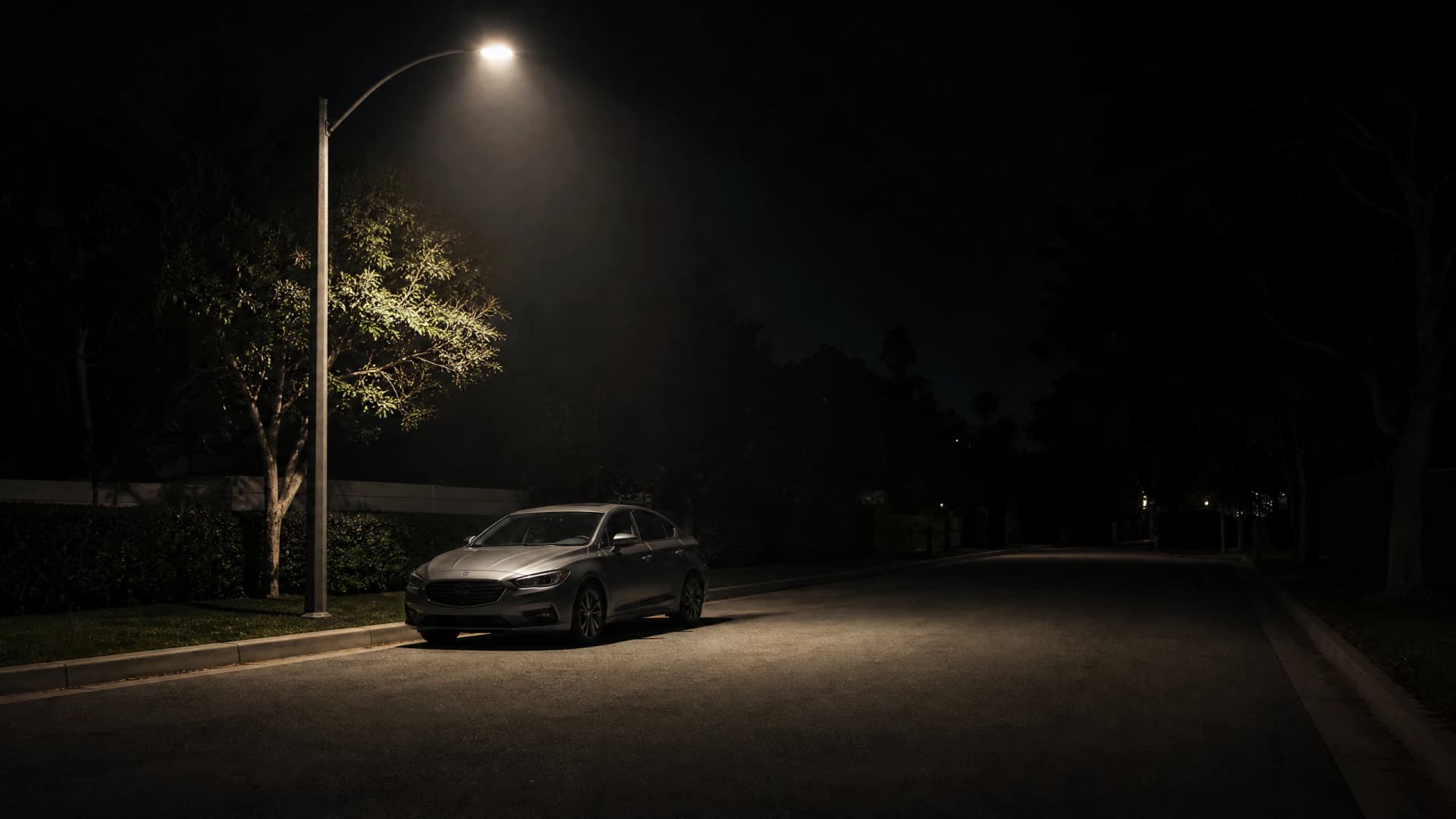
The $5,000 minimum rarely covers the full cost of totaling another vehicle.

Why Most Drivers Carry More Than the Minimum
The $5,000 minimum exists to meet Pennsylvania's legal floor, not to protect you from the full cost of an accident. Totaling another driver's vehicle, hitting a storefront, or damaging a guardrail typically costs more than $5,000. When your liability limit is exhausted, you pay the remaining cost personally, and the other party can pursue a judgment against you for the balance.
Carriers writing in Pennsylvania — including State Farm, Geico, Progressive, Allstate, Erie, Nationwide, and others — offer property damage limits above the minimum.
Pennsylvania does not require uninsured motorist property damage coverage, so if an uninsured driver hits your car, you file a claim under your own collision coverage (if you carry it) or pay for repairs yourself. Carrying higher property damage liability does not protect you from uninsured drivers — it protects you from personal liability when you cause damage to someone else.
11%
PA Uninsured Motorist Rate
Eleven percent of Pennsylvania motorists drive uninsured, meaning roughly one in nine drivers on the road carries no liability coverage. If an uninsured driver hits you, your collision coverage (if you carry it) pays for your vehicle damage, or you pay out of pocket.
Insurance Research Council, 2023
How Property Damage Liability Interacts with Other Required Coverages
Pennsylvania requires three liability coverages on every policy: $15,000 bodily injury per person, $30,000 bodily injury per accident, and $5,000 property damage per accident. These three coverages work together to meet the state's financial responsibility requirement. You cannot register a vehicle or renew your registration without proof of all three.
Pennsylvania also requires personal injury protection (PIP) coverage, which pays your own medical expenses after an accident regardless of fault. PIP does not replace property damage liability — it covers injury, not property. The $5,000 property damage minimum is a separate, mandatory coverage that pays for damage your vehicle causes to someone else's property.
Compare Carriers and Limits for Your Household
If you insure multiple vehicles in Pennsylvania, compare property damage liability limits across carriers that write multi-vehicle policies in the state. The $5,000 minimum meets the legal floor, but it leaves most households exposed to personal liability when an accident exceeds that limit.
How Multi-Vehicle Households Structure Property Damage Limits
If you insure three vehicles on one policy with $5,000 property damage liability and one of those vehicles causes an accident, your policy pays up to $5,000 for the other party's property damage. The limit does not multiply by the number of vehicles on your policy. Adding a second or third car to your policy does not increase your property damage coverage — you set the limit when you structure the policy, and it applies to every covered vehicle equally.
Households with multiple vehicles often carry higher limits because the risk of causing significant property damage increases with more drivers and more trips.
Get Your Free Quote
Get My Pennsylvania Car Insurance QuoteFrequently Asked Questions
Does Pennsylvania require property damage liability coverage?
Yes. Pennsylvania requires $5,000 property damage liability coverage per accident on every registered vehicle. This is the lowest state minimum in the U.S. and applies whether you insure one car or multiple vehicles on the same policy.
What does Pennsylvania's $5,000 property damage minimum cover?
The $5,000 minimum pays up to $5,000 for damage your vehicle causes to another person's property in an accident you cause. If the damage exceeds $5,000, you pay the remaining cost out of pocket. It does not cover damage to your own vehicle.
Can I register a car in Pennsylvania without property damage liability?
No. Pennsylvania requires proof of $5,000 property damage liability coverage to register a vehicle. PennDOT enforces this through self-certification at registration and insurer cancellation notices under 75 Pa.C.S. §1786(e).
Does the property damage limit increase if I insure multiple cars on one policy?
No. The property damage limit applies per accident, not per vehicle. If you insure three cars on one policy with $5,000 property damage liability and one of those cars causes an accident, your policy pays up to $5,000 total for the other party's property damage.
Why do most Pennsylvania drivers carry more than the $5,000 minimum?
The $5,000 minimum rarely covers the full cost of totaling another vehicle or damaging commercial property. Carriers offer higher limits to close that exposure.
What happens if I cause more than $5,000 in property damage with the minimum coverage?
Your insurer pays $5,000, and you are personally liable for the remaining cost. The other party can pursue a judgment against you for the balance. Carrying a higher property damage limit protects you from personal liability above the minimum.