
State Farm Multi-Car Insurance — Pennsylvania
Free to compare
State Farm Multi-Car Policy Structure in Pennsylvania
You own two cars, or you're about to add a second vehicle to your household, and you're evaluating whether State Farm's multi-car discount delivers the lowest combined premium for your Pennsylvania household. The question isn't whether State Farm offers a discount — it does — but whether the carrier's same-policy requirement and base rate structure produce a lower total cost than carriers that write multi-vehicle households differently.
State Farm writes multi-car policies in Pennsylvania and requires every vehicle to sit on the same policy, garaged at the same address, to qualify for the multi-car discount. If one car is titled to a household member on a separate policy, or if a vehicle is garaged at a second address, the discount does not apply. That structure works cleanly for households where every car shares one title and one address, but it blocks households with vehicles titled separately, cars garaged apart, or drivers who maintain separate policies for coverage or credit reasons.
“State Farm will not apply the multi-car discount if any household vehicle remains on a separate policy, even if that policy is also with State Farm.”

Meet Pennsylvania's Requirements Without Overpaying
Get My Pennsylvania Car Insurance Quote$15,000/$30,000/$5,000
Pennsylvania Minimum Liability
Pennsylvania requires $15,000 bodily injury per person, $30,000 per accident, and $5,000 property damage. Every vehicle on your policy must meet these minimums, and adding a second or third car re-rates the entire policy based on each vehicle's characteristics and the drivers assigned to them.
Pennsylvania Department of Transportation
What State Farm's Same-Policy Requirement Actually Means
State Farm's multi-car discount applies only when every vehicle in the household sits on one policy. The carrier does not discount vehicles across separate policies, even when both policies are with State Farm and cover members of the same household. If you and your spouse each hold a State Farm policy and you add a second car to one of those policies, the discount applies only to the policy that holds both vehicles — the other policy remains at its single-vehicle rate.
This structure differs from carriers that allow multi-vehicle discounts across separately-titled policies or that write vehicles garaged at different addresses under one household umbrella. State Farm's approach simplifies administration but requires every car to share one policy number, one renewal date, and one billing cycle. Households that cannot consolidate every vehicle onto one policy lose the discount entirely.
The same-policy rule also means that adding a vehicle mid-term re-rates the entire policy immediately. State Farm does not simply add a flat amount for the new car — the carrier recalculates the premium for every vehicle on the policy based on the updated household profile, the new vehicle's characteristics, and the drivers assigned to each car. That recalculation can raise the premium for existing vehicles if the new car or its assigned driver shifts the household's risk profile.
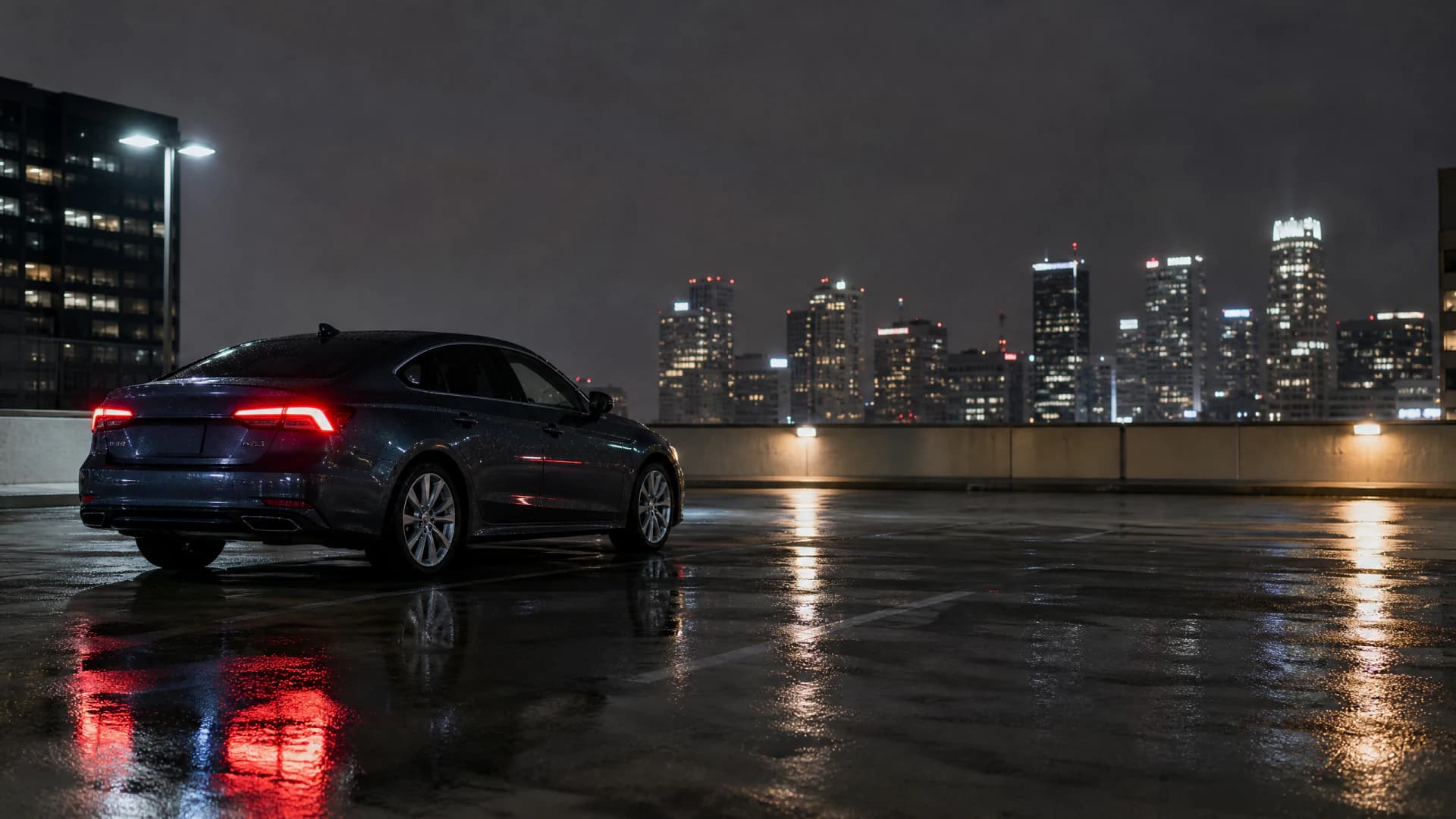
State Farm will not apply the multi-car discount if any household vehicle remains on a separate policy, even if that separate policy is also with State Farm.
Related Articles



When State Farm's Structure Blocks the Multi-Car Discount
State Farm's same-policy requirement blocks households where vehicles cannot consolidate onto one policy. A car titled to a household member who maintains a separate policy for credit or coverage reasons does not qualify for the discount, even if both policies are with State Farm. A vehicle garaged at a second address — common for households with a college-age driver or a car kept at a vacation property — may not qualify, depending on how State Farm interprets the garaging rule in your underwriting review.
Households that combine policies after marriage face the same consolidation requirement. If you and your spouse each hold a State Farm policy and you want the multi-car discount, one policy must be canceled and both vehicles moved to the remaining policy. That consolidation triggers a full re-rate, and the combined premium may be higher or lower than the sum of the two separate premiums depending on each driver's record, the vehicles insured, and the coverage levels selected.
State Farm also requires every driver in the household to be listed on the policy or explicitly excluded. If a household member holds a separate policy for their own vehicle, State Farm may require that driver to be excluded from your policy to avoid overlap. That exclusion means the excluded driver cannot operate any vehicle on your policy, even occasionally, without creating a coverage gap. Households where drivers share vehicles across separate policies cannot structure coverage cleanly under State Farm's rules.
26 carriers
Pennsylvania Multi-Car Carriers
Pennsylvania households compare 26 carriers writing multi-vehicle policies in the state, including preferred-tier carriers like State Farm, Erie, and Nationwide, and non-standard carriers like Bristol West, Dairyland, and The General. Carrier availability and discount structure vary by household profile and vehicle count.
Pennsylvania Department of Insurance

Comparing State Farm Against Carriers That Write Your Household Structure
The comparison process requires quotes from carriers that write your specific household structure: the number of vehicles, the drivers assigned to each car, the coverage levels you select, and whether any vehicle or driver creates an underwriting exception. State Farm writes preferred-tier households where every vehicle can sit on one policy and every driver meets the carrier's underwriting criteria. If your household does not fit that structure, comparing State Farm against carriers that write your actual situation identifies whether State Farm's rate is competitive or whether another carrier delivers a lower combined premium.
Request quotes with identical coverage limits across every carrier. Pennsylvania requires $15,000 per person and $30,000 per accident bodily injury liability, plus $5,000 property damage, but most households carry higher limits to protect assets. Compare quotes at the same liability limits, the same collision and comprehensive deductibles, and the same optional coverages to isolate the base rate and discount structure differences between carriers. A lower premium with lower limits is not a savings — it is underinsurance.
What to Do Right Now
Identify whether your household fits State Farm's same-policy structure: every vehicle titled to one household, garaged at one address, and every driver meeting preferred-tier underwriting criteria. If your household fits that structure, request a State Farm quote and compare it against quotes from Geico, Progressive, Erie, Allstate, and Nationwide at identical coverage limits. If your household cannot consolidate every vehicle onto one policy, or if a driver has a recent violation, request quotes from carriers writing your actual structure, including non-standard carriers that write households State Farm declines. The carrier with the lowest combined premium for your household's vehicles and drivers is the correct choice, regardless of brand.
How State Farm's Multi-Car Discount Compares to Competing Carriers
State Farm writes preferred-tier households and requires every vehicle on one policy to qualify for the multi-car discount. The carrier does not publish the discount percentage, and the actual savings vary by household. Competing carriers writing Pennsylvania multi-car households include Geico, Progressive, Allstate, Nationwide, Erie, and Farmers, each with different base rates and same-policy requirements. Geico and Progressive write multi-car policies online and allow mid-term vehicle additions with immediate re-rating. Erie writes Pennsylvania households through agents and offers multi-vehicle discounts for policies combining auto and home coverage.
Carriers that write non-standard or high-risk households — including Bristol West, Dairyland, Direct Auto, and The General — also write multi-car policies in Pennsylvania, often with higher base rates but more flexible underwriting for drivers State Farm declines. If one driver in your household has a recent violation or a suspended license, State Farm may decline the entire household or price the policy at a rate higher than a non-standard carrier that writes the violation directly. Comparing carriers requires quotes from both preferred-tier and non-standard carriers to identify which writes your household structure at the lowest combined premium.
Get Your Free Quote
Get My Pennsylvania Car Insurance QuoteFrequently Asked Questions
Does State Farm offer a multi-car discount in Pennsylvania?
Yes. State Farm offers a multi-car discount in Pennsylvania, but every vehicle must sit on the same policy, garaged at the same address, to qualify. Vehicles on separate policies do not receive the discount, even if both policies are with State Farm.
Can I get State Farm's multi-car discount if my spouse has a separate State Farm policy?
No. State Farm's multi-car discount applies only to vehicles on the same policy. If you and your spouse each hold a separate State Farm policy, one policy must be canceled and both vehicles moved to the remaining policy to qualify for the discount.
What happens to my State Farm premium when I add a second car?
Adding a second car to your State Farm policy re-rates the entire policy immediately. State Farm recalculates the premium for every vehicle based on the updated household profile, the new vehicle's characteristics, and the drivers assigned to each car. The premium for your existing vehicle may increase if the new car or its driver shifts your household's risk profile.
Does State Farm write multi-car policies for households with a driver who has a DUI?
State Farm may decline a household with a recent DUI or price the policy at a rate higher than non-standard carriers that write violations directly. If State Farm declines your household, compare quotes from Bristol West, Dairyland, Direct Auto, The General, and other non-standard carriers writing Pennsylvania multi-car policies.
How do I compare State Farm's multi-car rate against other Pennsylvania carriers?
Request quotes from State Farm and at least three competing carriers at identical coverage limits: the same liability limits, the same collision and comprehensive deductibles, and the same optional coverages. Compare the total premium for all vehicles combined. The carrier with the lowest combined premium for your household's vehicles and drivers is the correct choice.
Can I keep one car on a State Farm policy and another car on a different carrier's policy?
Yes, but you will not receive State Farm's multi-car discount. The discount applies only when every vehicle sits on the same State Farm policy. Splitting vehicles across carriers may produce a lower combined premium if one carrier writes one vehicle at a significantly lower rate, but you lose the multi-car discount from both carriers.